
You’ve probably clicked through dozens of games, feeling that weird mix of hope and fatigue. That endless scroll of slots and tables isn’t a bug in the system—it’s a feature. But here’s the raw truth: most players don’t pick games; they get picked by flashy graphics and bonus promises. The whole online casino scene has exploded, sure, but the real shift in online gambling trends 2026 isn’t about more games—it’s about smarter design. AI-driven personalization now tailors your lobby, pushing titles based on your past clicks, not your actual skill. And immersive live-dealer tech? It’s blurring the line between luck and strategy, making you think you’re in control. So, let’s stop the passive scrolling. This isn’t a fluff listicle. We’re dissecting why certain games hook you—not just their mechanics, but the player psychology and casino game strategy baked into every reel and card. Understanding the difference between a ‘lucky’ game and a strategically sound one is the only way to stop being a passive player. You’re here to choose, not to be chosen.
The Undisputed King: Why Slot Machines Dominate (And How to Play Smart)
You step into a digital casino, and what hits you first? The chaos. The shimmer. The relentless sound of coins, jingles, and near-miss chimes. That’s the sonic signature of the online slot—a machine that quietly accounts for over 70% of all online casino revenue. But here’s the brutal truth: most players don’t understand what they’re spinning. They treat it like a skill game, like blackjack or poker, where you can bluff your way to a win. You can’t. Slots are not games of skill. They are games of choice—specifically, your choice of bankroll management and volatility profile.
I once saw a player burn through a $500 bonus on a high-volatility slot in 10 minutes. Why? He didn’t check the variance first. He saw a flashy trailer for a game with a 10,000x potential and assumed he’d hit it. He didn’t. He just fed the machine. The real trick isn’t predicting a win—it’s setting a loss limit before you spin. That’s the only strategy that works.
Modern slots like Starburst, Gates of Olympus, or Big Bass Bonanza dominate because they tap into your brain’s reward system. They use high hit frequencies, bonus mechanics like Megaways or cluster pays, and psychological triggers—near-misses, sound design, flashing lights. The tumbling reels in Sweet Bonanza can chain wins, creating a dopamine loop that keeps you spinning. But the expert’s insight? It’s knowing which volatility profile matches your session goal. Low volatility for entertainment—spinning for an hour, sipping a drink, watching small wins stack. High volatility for jackpot hunting—where you might go 100 spins dry, then hit a 5,000x multiplier. Choose your poison.
And here’s a myth worth busting: there is no such thing as a “hot” or “cold” machine. That’s superstition. Every spin is independent. The RNG doesn’t care about your last loss. Forget the nonsense about machines being due for a win. Play smart, not superstitious.
Dissecting the Appeal: Volatility, Themes, and Bonus Mechanics
Let’s slice it open. Picture a low-volatility game like Blood Suckers. It’s a vampire-themed slot with a 98% RTP—one of the highest. But here’s the catch: a 96% RTP does not guarantee a win in a single session. It’s a long-term average. In Blood Suckers, you’ll see frequent small wins, maybe 20-30 spins before a bonus round. It’s a sips-you-drink, chat-with-friends, play-for-an-hour kind of game. Now contrast that with a high-volatility beast like Dead or Alive 2. This game is a desert. You might spin 100 times and see nothing. Then, a single free spin round with sticky wilds can drop you a 12,000x win. But the journey there is brutal.
Here’s the actionable advice: match the game’s volatility to your bankroll. For a $100 session, choose low-vol games to play for an hour, not five minutes. If you’re chasing a progressive jackpot, sure, go high-vol—but bring a thicker wallet. The themes? They’re just candy. The real choice is between variance and patience.
The Rise of Drops & Wins and Live Slots
The industry is shifting. No longer are you just playing against a machine. Now, you’re playing against other humans, in real-time, with leaderboards. This is the era of Drops & Wins and live slots. Providers like Pragmatic Play and Evolution Gaming are pioneering this gamification trend. A player in my network turned a $20 deposit into a $200 leaderboard prize by playing during a Drops & Wins event—just by timing his session around the promotion. These events rain random multipliers on any spin, turning a slow Tuesday into a chaotic jackpot scramble. The key here is timing. Playing smart means knowing when these promotions drop. It’s not about the spin anymore—it’s about the calendar. Watch the schedule, set your alarms, and play the system, not just the reels.

Blackjack: Where Skill Meets the House Edge (The Informed Player’s Game)
You can either play like a tourist—hoping for a lucky streak—or you can play like an analyst. The difference is a chasm, not a crack. Online blackjack, when stripped of flashy distractions, is the most cerebral game in the casino lobby. Why? Because the house edge can dip below 1% if you actually use a basic strategy chart. But most casual players never see that number. They buy into the glitz, drop money on side bets like “Perfect Pairs” or “21+3,” and watch the edge skyrocket to 8% or more. That’s not gambling; that’s just setting cash on fire. One player—a real person—lost $300 in a single session chasing those side-bet payouts before finally learning to stick to the main game. Lesson learned: the expert’s game is pure blackjack, with a strategy card open on a second screen. No shame in that. Memorize the hard 16 vs. dealer 10 surrender decision—it saves you money over time, even if it feels wrong. And here’s a wrinkle: card counting online is nearly useless because RNG shuffles reset the deck every hand. But in live-dealer blackjack with a fresh shoe, shuffle tracking can offer a subtle edge. The current trend? Infinite tables with auto-split features, where you never wait for a seat. Just remember: the house edge is low, but it’s not zero. Play like an analyst, not a tourist.
Subtitle: How to Find the Best Rules: Dealer Stands on Soft 17 vs. Hits
When you open a blackjack lobby, check three things: number of decks, dealer action on soft 17, and surrender policy. A 6-deck game where the dealer stands on soft 17 (S17) is often better than a single-deck game where the dealer hits (H17). Example: a single-deck H17 game has a house edge of about 0.18%, while an 8-deck H17 game is around 0.65%. That’s a huge swing. Always look for late surrender too—it shaves off another 0.07%. European blackjack rules with no hole card? That’s a separate beast. Just remember: the soft 17 rule alone can make or break your long-term odds.
Roulette: The Modern Player’s Guide to the Wheel (European vs. American)
If you’re playing American Roulette, you’re giving the house almost twice as much money for the same spin. Stop. The numbers don’t lie: a double-zero wheel carries a brutal 5.26% house edge, while the single-zero European version sits at a far more palatable 2.7%. Yet most players wander into the casino, sit at the American layout, and wonder why their bankroll evaporates faster than a free drink. The worst part? European Roulette is everywhere—online, at higher-end tables, even in some brick-and-mortar joints. But people keep choosing the wrong wheel out of habit or ignorance.
Now, about those “guaranteed” betting systems. The Martingale, the Fibonacci, the D’Alembert—they’re all mathematically doomed. The Martingale, for instance, doubles your bet after a loss, which can expose you to a $1,000+ bet after five losses on a $10 table. That’s not strategy; it’s a slow-motion train wreck. I watched a player win eight hands in a row with a Martingale on red—only to lose on the ninth spin when black hit, wiping out all profits. The only winning long-term strategy is to bet on outside bets—red/black, odd/even—and accept that you’re paying for entertainment. No progression, no magic bullets.
If you want an edge, look for tables that offer En Prison or La Partage rules. These cut the house edge on even-money bets to 1.35% in European Roulette. That’s practically a fair game. And then there’s the newest trend: Lightning Roulette, a hybrid game that sacrifices long-term odds for short-term excitement. Random multipliers of 50x to 500x crash down on straight-up numbers, turning a stately wheel into a slot-like thrill ride. The odds are worse—the house edge balloons—but the adrenaline is real. Just know what you’re buying.
Betting Systems: The Allure of the ‘Guaranteed’ Win
The Martingale is the most seductive trap in roulette. You win, you win. You lose, you double up. It feels like a guarantee—until it isn’t. Storytime: a guy at a $10 table hit red eight times in a row with a Martingale. He was up $100. Then black hit on the ninth spin. His next bet would have been $1,280. He didn’t have it. All profits gone, plus a chunk of his bankroll. The system doesn’t break the math; it exposes you to table limits and a run of bad luck. Instead of a dangerous progression, set a fixed bet size—say, 2% of your bankroll per spin. That turns roulette into a controlled experience, not a gamble. You’ll lose slower, enjoy more spins, and never face a catastrophic double-or-nothing moment.
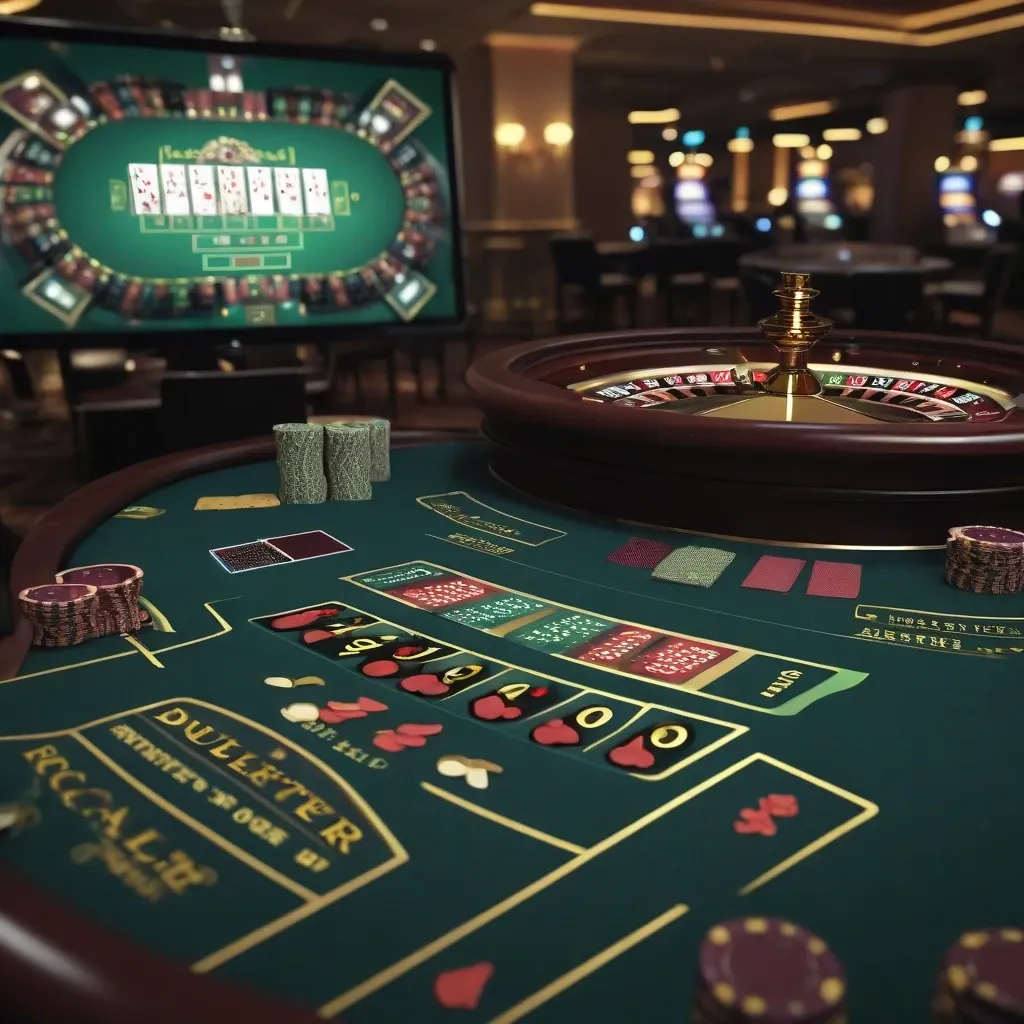
The Live Casino Revolution: Poker, Game Shows, and Social Play
Live dealer games smashed the old barrier between digital convenience and real-world casino atmosphere. No more staring at random number generators—now you get a human dealing cards, spinning wheels, and even cracking jokes. Beyond the usual blackjack and roulette tables, three categories have exploded in popularity, each with its own weird charm and hidden traps.
Live Poker Variants (Casino Hold’em, Three Card Poker) are not your Friday night poker game. They strip away the bluffing and community decision-making, replacing it with a straightforward battle against the dealer. The skill ceiling is lower than traditional poker, which is exactly why casual players love them—you can jump in without studying ranges for months. But don’t mistake simplicity for free money; poor hand selection still burns cash fast.
Game Shows (Crazy Time, Monopoly Live, Dream Catcher) are the rollercoasters of online casinos. Pure adrenaline, spinning wheels, bonus rounds with giant cash multipliers, and hosts who scream into the camera. The catch? These games carry the highest house edge in the live lobby—up to 10% on bonus segments. Yet Crazy Time has become the #1 live game by revenue in many markets. Why? Because entertainment value beats statistics for most players.
Baccarat dominates Asian markets but deserves global attention. It’s the simplest game to play—just pick player or banker—and the Banker bet carries a house edge of only 1.06%. No decisions, no stress, just pure low-edge action with a social vibe. For a balance of low house edge and social interaction, live Baccarat or Casino Hold’em is the sweet spot. Game shows are for thrill-seekers who don’t mind paying for the ride. Live poker variants are chess matches; Baccarat is the calm handshake. Choose your chaos.
Poker vs. Casino Poker: Understanding the Difference
Many players walk into Casino Hold’em thinking it plays like Texas Hold’em against other people. Wrong. Here you only beat the dealer, and the dealer must qualify with a pair or better. Strategy shifts completely. In Casino Hold’em, you should never play hands worse than Q-6-4. Many new players lose money by calling with weak hands like J-2 offsuit—that’s a fast track to bankroll oblivion.
A real-world example: A player once hit a straight flush in Ultimate Texas Hold’em for a massive payout, but their win was completely offset by playing 80% of their hands instead of the recommended 40%. Discipline at the poker variant table is everything. Know the qualifying rules, fold the junk, and let the dealer’s bad luck do the work.
Final Table: Strategic Takeaways for the Modern Player
Let’s cut the noise. Popularity doesn’t mean profitability—not even close. Slots, roulette, and blackjack dominate the lobby for totally different reasons. Slots are pure entertainment with flashy lights and a dopamine drip. Roulette? It’s the thrill of the spin, simplicity at its finest. Blackjack? That’s the illusion of control, the strategy nerd’s playground. But here’s the kicker: none of them are designed to make you rich. You now have the framework to decide: Do you want the thrilling uncertainty of a slot, the strategic rhythm of blackjack, or the pure chance of roulette? The choice is yours, but the knowledge is your edge.
So stop treating every game like a lottery ticket. Pick your goal—entertainment or winning—and stick to it. Memorize the house edge for every bet you place, because that number is the only truth in the casino. Bonuses? They’re tools, not gifts. Use them to extend play, not to chase losses. The real winning strategy is boring: discipline, education, and knowing when to walk away. This is the same advice I give to my private clients. Next time you log in, don’t just click the first game that pops up. Apply this guide. Play with intent, and you’ll get more value—and more fun—from every session.